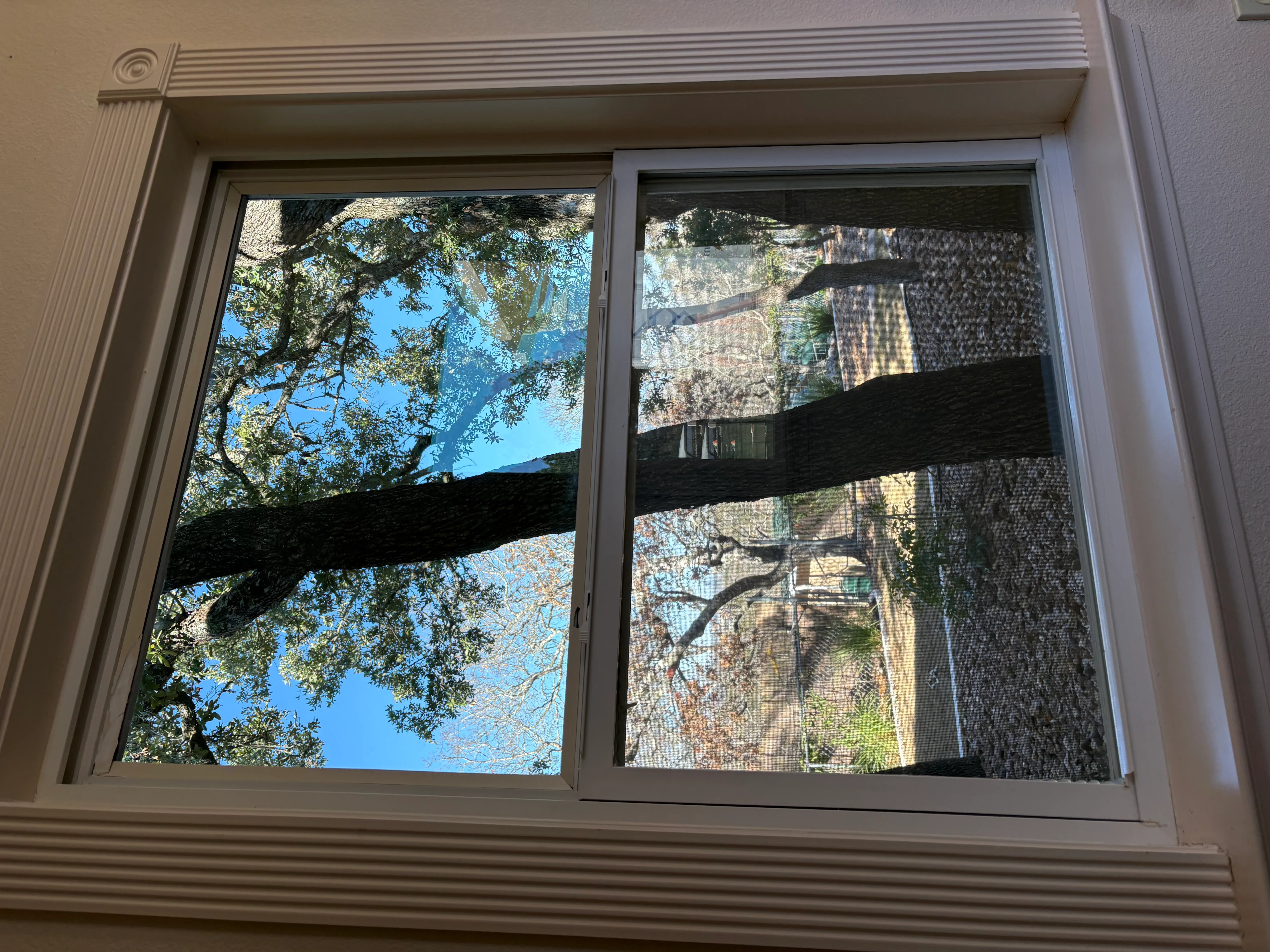
Understanding Insulated Glass Units (IGUs): A Homeowner's Guide
Written by Maria Joaquina
Content Writer for Aloha Glass & Mirror
Reviewed by Austin
Owner & Lead Installer, Aloha Glass & Mirror
If your home has double-pane or triple-pane windows, you have insulated glass units (IGUs). Understanding how they work helps you recognize when they need replacement and make informed decisions about your options.
How IGUs Work
An insulated glass unit consists of two or three panes of glass separated by a spacer bar and hermetically sealed together. The space between the panes is filled with air or an insulating gas such as argon or krypton. This sealed air space acts as a thermal barrier, reducing heat transfer between the interior and exterior of your home.
The spacer bar, typically made of aluminum or a warm-edge composite material, keeps the panes at a consistent distance apart. A primary seal (usually butyl) provides the moisture barrier, while a secondary seal (typically silicone or polysulfide) provides structural integrity.
Why IGUs Fail
The most common failure mode is seal breakdown. Over time, the sealant deteriorates due to UV exposure, temperature cycling, and age. When the seal fails, moisture enters the space between panes, causing fogging and condensation that cannot be cleaned. The insulating gas also escapes, reducing the unit's thermal performance.
Signs of IGU failure include visible fog or moisture between panes, a hazy or milky appearance, water droplets inside the glass, and distortion of the glass panels. In the Texas Hill Country, intense UV exposure and extreme temperature swings can accelerate seal degradation.
Replacement Options
When an IGU fails, the entire sealed unit needs to be replaced, but the window frame can usually be reused if it is in good condition. This is called a glass-only replacement and is significantly less expensive than replacing the entire window.
For replacement IGUs, consider upgrading to Low-E coated glass if your original windows did not have it. Argon gas fill provides about 30 percent better insulation than air and adds minimal cost. For south and west-facing windows in Texas, a Low-E coating with a low Solar Heat Gain Coefficient (SHGC) will provide the greatest energy savings.
Argon vs. Krypton Gas
Argon is the most common gas fill and provides excellent insulation at an affordable price. Krypton is denser and provides better insulation, but costs significantly more. For most residential applications, argon provides the best value. Krypton is typically used in triple-pane windows where the gap between panes is narrower.
Warm-Edge Spacers
Traditional aluminum spacers conduct heat and can create cold spots at the edges of the glass. Warm-edge spacers made from composite materials or stainless steel reduce edge heat transfer and minimize condensation at the glass perimeter. When replacing IGUs, upgrading to warm-edge spacers is a worthwhile improvement.
Maintenance and Lifespan
Quality IGUs typically last 15 to 25 years. To maximize lifespan, ensure proper drainage around window frames to prevent water from pooling at the base. Avoid pressure washing window seals, which can accelerate seal deterioration. Regular inspection of the sealant and glazing allows you to catch problems early, when a simple reseal may prevent full unit failure.
Frequently Asked Questions
Can fogged double-pane windows be repaired without replacing the glass?
In most cases, no. Once the seal fails and moisture enters between the panes, the entire insulated glass unit needs to be replaced. Some services offer defogging, but results are often temporary since the seal remains compromised.
How much does it cost to replace an insulated glass unit?
IGU replacement costs vary by size, glass type, and coatings selected. Glass-only replacement is typically 40 to 60 percent less expensive than full window replacement since the existing frame is reused.
Is it better to replace just the glass or the entire window?
If the window frame is in good condition and structurally sound, replacing just the insulated glass unit is the most cost-effective option. If the frame is damaged, rotting, or outdated, full window replacement may be the better long-term investment.
Written by Maria Joaquina
Content Writer for Aloha Glass & Mirror
Maria Joaquina writes about glass and mirror installation for Aloha Glass & Mirror. Every article is developed from expert input and reviewed for technical accuracy by Austin, the company's owner and lead installer.
Reviewed by Austin
Owner & Lead Installer, Aloha Glass & Mirror
Austin is the owner and lead installer at Aloha Glass & Mirror, with years of hands-on experience in precision glass fabrication, window installation, custom mirrors, and shower enclosures across the Texas Hill Country. He reviews every article for technical accuracy before it is published.